Dates: September 11th to September 14th
What Is It?
Konno Hachimangu is the largest Shinto shrine festival in Shibuya and Tokyo. It takes place annually in mid-September, specifically from September 11th to September 14th. This vibrant celebration is a must-see for foreigners wanting to experience authentic Japanese culture, tradition, and vibrant street festivities right in the heart of Tokyo. Throughout the weekend, visitors can enjoy a grand mikoshi (portable shrines) parade, kagura (shinto ritual ceremonial) dance performances, local food from street vendors, draw omikuji (fortune slips), and lively taiko drumming performances that embody traditional Japanese culture!
The History Behind
Konno Hachimangu Shrine dates back to the Heian period of Japan, where it was built in 1092 during the reign of Emperor Horikawa. The shrine is located on the historical site of Shibuya Castle, a legacy of the Shibuya clan, being one of the oldest structures in Tokyo today. “小大野 (Konno)” refers to the local area and “八幡宮 (Hachimangu)” honors Hachiman Okami, the Shinto god of warriors and protector of Japan, who is enshrined here as the guardian deity. This festival celebrates the bounty of autumn, health, prosperity, and the spiritual protection of the community.
What Makes The Festival Unique?
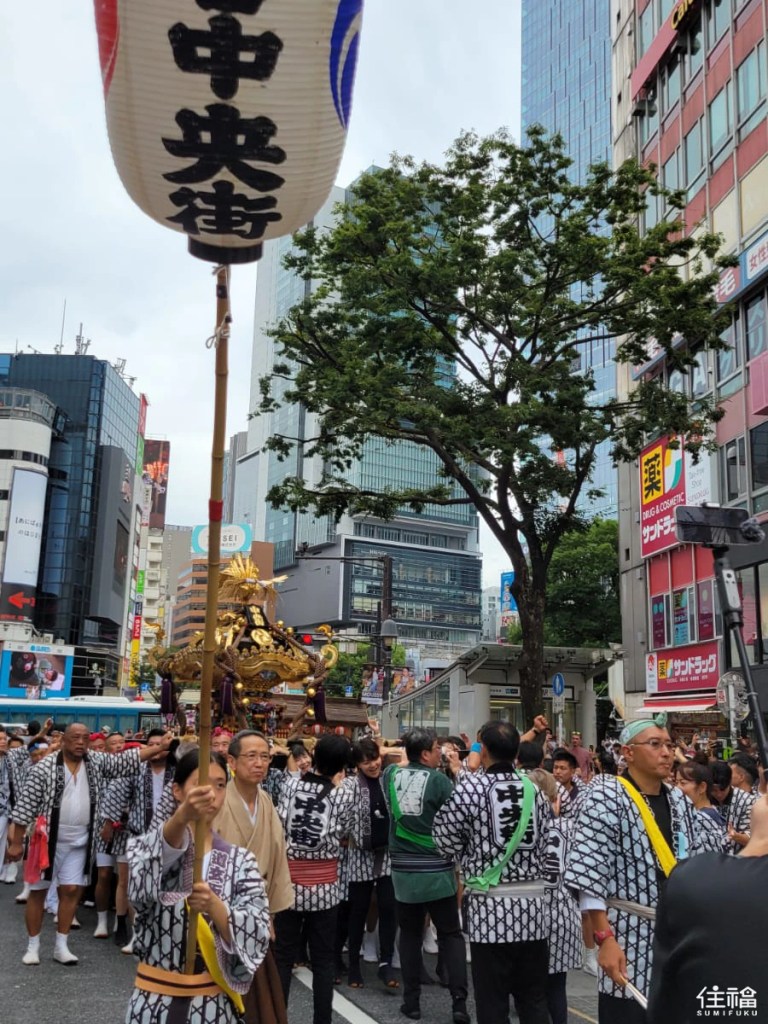
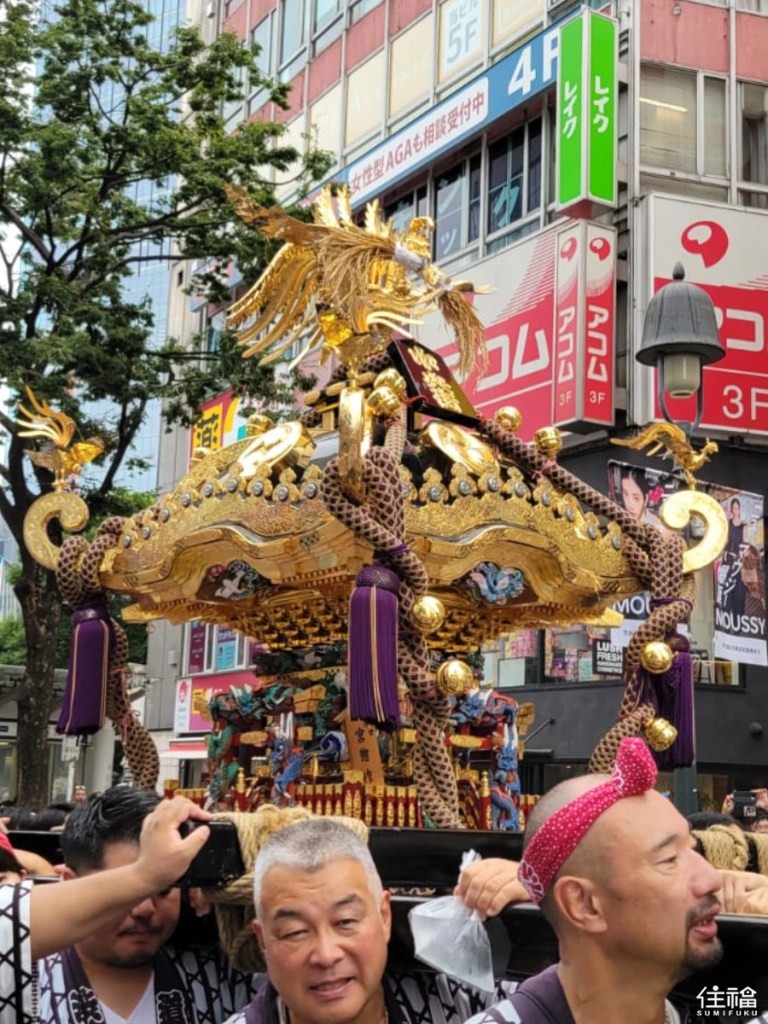
- It features a grand parade of mikoshi (portable shrines), with up to 14 shrines carried by locals through Aoyama and Shibuya. The locals bounce the mikoshi rhythmically up and down to the beat of a whistle and chants. Finally, the highlight comes when all shrines converge in front of the famous Shibuya 109 building, creating a spectacular outdoor atmosphere.
- It’s not just a religious event, but a lively, community-wide celebration with music, traditional dances, like kagura, and Japanese street food, yakisoba (fried noodles), takoyaki (octopus balls), matcha (green tea) or alcoholic drinks, like highball and more!
- The festival venues are set in central Shibuya, making it highly accessible for travelers and providing a rare glimpse into local traditions amid one of Japan’s busiest urban hubs.
What to Expect Each Day
The four-day festival offers different experiences depending on when you visit. On September 11th, the festival begins with traditional rituals at the shrine itself, where priests perform purification ceremonies and offer prayers for the community’s wellbeing. This quieter opening day is perfect for those who want to experience the spiritual essence without large crowds.
September 12th and 13th ramp up the energy significantly. These days feature continuous street performances, with taiko drum groups performing at various intervals throughout the day. Local neighborhood associations set up their food stalls along the approach to the shrine, and the atmosphere becomes increasingly festive as the weekend approaches. You’ll notice participants wearing traditional happi coats—short festival jackets in bold colors representing different neighborhoods—creating a sea of coordinated colors throughout the festival grounds.
The grand finale on September 14th is when the main mikoshi parade takes place. This climactic event typically begins around midday and continues into the evening. The procession route winds through narrow residential streets before emerging onto the main thoroughfares of Shibuya, ultimately converging at Shibuya 109. The energy is palpable as hundreds of participants chant “Wasshoi! Wasshoi!” while hoisting the heavy portable shrines on their shoulders. Each mikoshi can weigh several hundred kilograms and requires coordinated effort from dozens of bearers who rotate throughout the parade.
The Fun Kokuhaku and Omikuji Corner: Dark Confessions and Fortune Slips
A beloved feature of the Konno Hachimangu Festival is the playful and intriguing Kokuhaku (Confession) and Omikuji Corner. Here, visitors are invited to confront and dispel their darker thoughts and feelings in a fun and lighthearted way. This space embodies the concept of 悪縁滅却 (Akuen Mekkyaku)—the extinguishing of all negative ties or misfortunes.
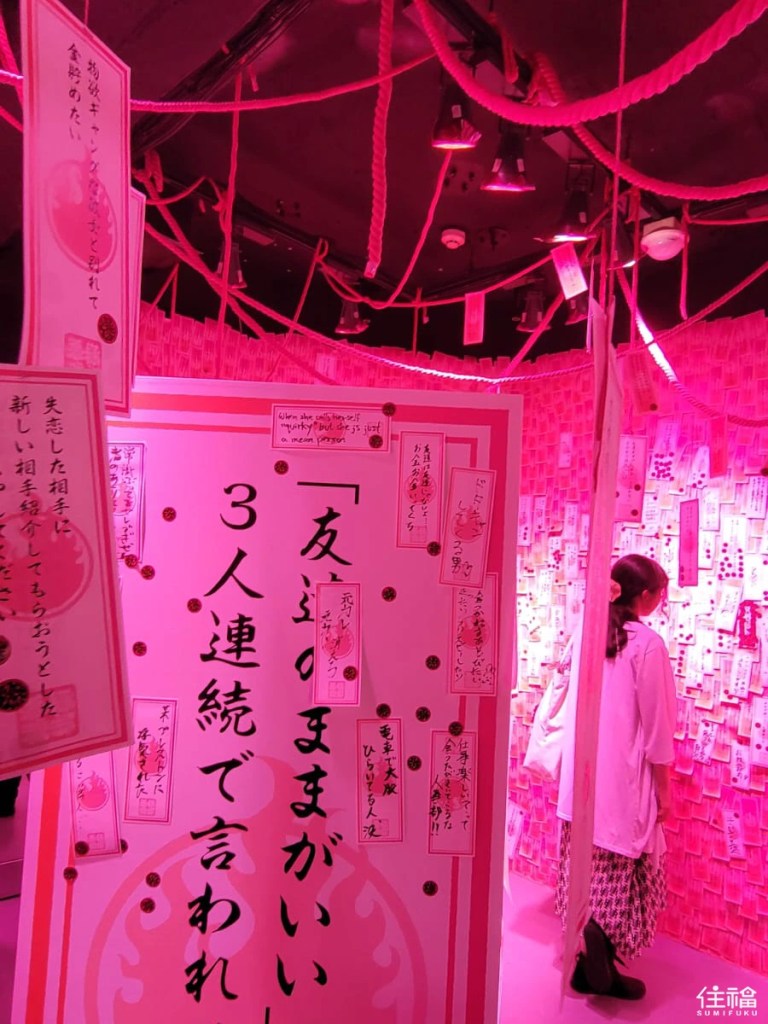
In a creative twist, this corner includes humorous or dark confessions anonymously shared by visitors, displayed within a 360-degree pink-lit space around the shine procession area.
These confessions encourage visitors to let go of any burdens or secret worries anonymously. This unique interactive element resonates with both locals and tourists, adding an amusing, reflective, and slightly mischievous dimension to the festival experience.
Why Should you go?
- Authentic cultural immersion, arts, and tradition: Witness age-old rituals, mikoshi processions, kagura dance performances, taiko drumming, and community spirit in the heart of Tokyo.
- Local food: Enjoy Japanese festival foods in a friendly, international and tourist-accessible setting.
- Interactive festival elements: Try your luck with omikuji and enjoy the playful and amusing “kokuhaku (confession) corner.”
- Convenience and accessibility: Located near Shibuya Station, the festival and shrine is easy to access while exploring one of Tokyo’s iconic neighborhoods.
- An educational experience: Learn about the rich history behind one of Japan’s oldest shrines, and the Shibuya clan’s legacy.
Location
- Name: Konno Hachimangu Shrine
- 〒150-0002 3 Chome-5-12 Shibuya, Tokyo
- 8 minutes walk from Shibuya Station
- Mon - Fri: 9am - 5pm
- Entry: Free
- https://www.konno-hachimangu.jp
How to Get There?
- By train: Take the JR Yamanote Line or Tokyo Metro Ginza/Hanzomon/Fukutoshin lines to Shibuya Station.
- To get to the shrine, exiting via C3 is the shortest walk. But if you would like to see the procession and the festivities on the way, exit the station via A3, walk north past Shibuya 109 on Dogenzaka street, then turn onto Meiji-dori. The shrine is 13 mins walk, or the other option is to walk from the shrine itself.
- Look for local signs and festival banners guiding you to the shrine grounds during festival days.
Good to know for visitors
- The procession starts at the shrine and ends on Dogenzaka street, in front of 109 shibuya.
- Arrive early for the mikoshi parade on September 14th to secure a good viewing spot near Shibuya 109.
- Bring cash for food stalls and small purchases, as many sellers may not accept cards.
- Respect local customs, bow before entering shrine areas, and follow instructions during the festivities. In Japan, there is a take home trash policy, which is why you see no trash cans anywhere.
- Wearing comfortable shoes is highly recommended, as much of the festival involves walking through busy streets.
So have you made your decision yet? Mark your calendars for Konno Hachimangu 2026 between September 11 to 14!

Related Articles
- The Best Shinto Shrines in Tokyo to Visit For a Little Luck
- Tokyo’s Shin-Okubo: The Favorite Shrine of Fan Girls, “Minato Inari Shrine” – Boost Your Luck with a Draw!
- 6 Best Things To Do in Fukuoka
- Finding a Quiet Spot Amid the Hustle and Bustle – Nishimukai Tenjin Shrine, Shinjuku, Tokyo
- Gotokuji Temple: Tokyo’s Adorable Lucky Cat Shrine

I’m a travel and content writer, occasionally publishing pieces and short stories on Medium. I love to travel within and outside Japan as well as eat good food, dance, and read!
Topic